Publish state visible Placement confirmed Review before rollout
Verification dossier
Trust
Native Intake is a narrow product for internal requests inside HubSpot records. This page explains what the site can prove today, what an admin controls, and where the public story should stop.
Approved proof model
A buyer should be able to verify four things quickly: the product lives inside HubSpot, setup is admin-controlled, the request starts from the record, and publish state is visible before rollout expands.
Native placement
Native Intake appears in HubSpot settings and in the CRM record tab, so buyers can evaluate it in the place their team already works.
Governed setup
The setup story stays constrained: one form, one object scope, one intended outcome, and visible publish status before rollout.
Predictable runtime
Public copy can safely say the runtime is in-record and easier to understand than a detached request flow or side-channel workaround.
Reviewable rollout
The launch-safe proof is that rollout can be reviewed before the team expands usage, not that a broad automation layer is already proven.
Launch-proof surface
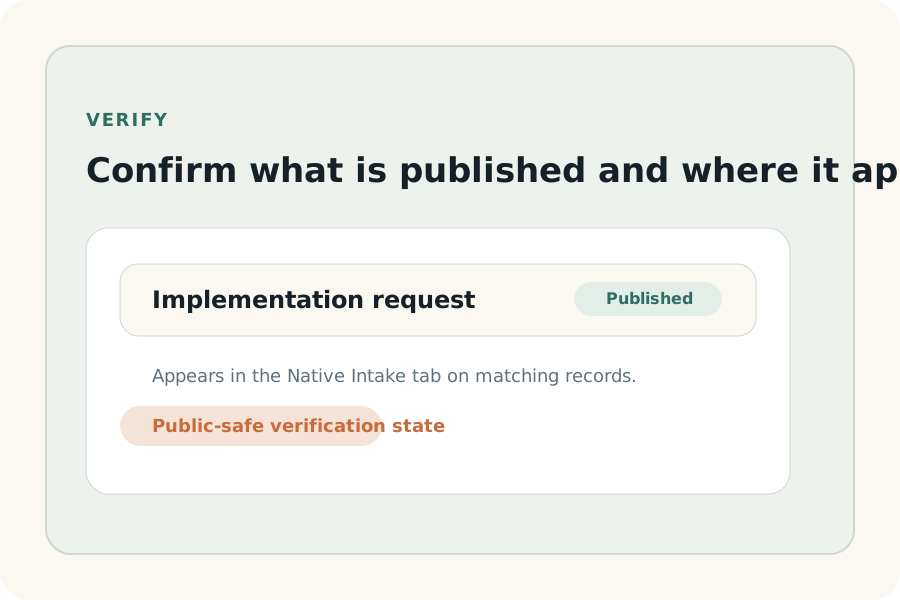
Trust improves when the site points to a real product surface instead of abstract reassurance. This crop keeps the claim narrow: admins can review publish state and placement before a wider rollout.
Admin control and rollout
The cleanest launch motion is a qualified demo tied to one workflow the team already wants to standardize. That keeps trust aligned with a realistic rollout instead of a broad platform promise too early.
Start with one handoff, request, or guided record update.
Confirm record context, admin ownership, and the one intended outcome.
Expand only after the first workflow is operationally clear and supportable.
This keeps buyer expectations, support load, and public messaging aligned with the real launch lane.
What this page does not promise
The launch story should stay operational. If the site cannot point to it in the product today, it should not imply it as a current fact.
Security and identity
The public site should not claim authenticated tenant isolation, hardened writeback, trusted actor identity, or enterprise-grade governance before those technical gates are actually closed.
Submission outcomes
Visible proof after submit on the source record, guaranteed record updates, ticket creation, and workflow-trigger language all stay out of the launch-safe trust copy.
Commercial posture
The site stays demo-led until installability, support readiness, and stronger proof gates are confirmed. Trust is helped by saying less, not by overselling.
Who should take the demo path
Use this page to decide whether the next step is package review, workflow qualification, or both.
Best first demo
The strongest conversation starts with a single governed process the team already repeats and wants to tighten inside HubSpot.
Use caution
Agencies, implementation partners, and multi-team buyers should use the guided path first so scope, support expectations, and product fit are explicit before expansion.
Pricing handoff
Pricing should answer lane fit and upgrade posture. The trust page should answer scope, admin control, and rollout realism.
FAQ
No. The public launch story is much narrower: guided internal intake inside HubSpot records for governed handoffs, requests, and structured updates.
The trust-safe story is admin-controlled setup, one form aligned to one record type, one clear intended outcome, and visible publish state before broader rollout.
Because the public site should not imply open install readiness before the product and trust gates have actually been closed. A guided demo keeps the commercial motion truthful and selective.
Security-readiness, broader self-serve availability, visible submission evidence, role-based runtime claims, record updates after submit, and ticket creation promises all stay behind explicit confirmation.